
McMaster Medicine, Man
"The best way to grow is to stretch"

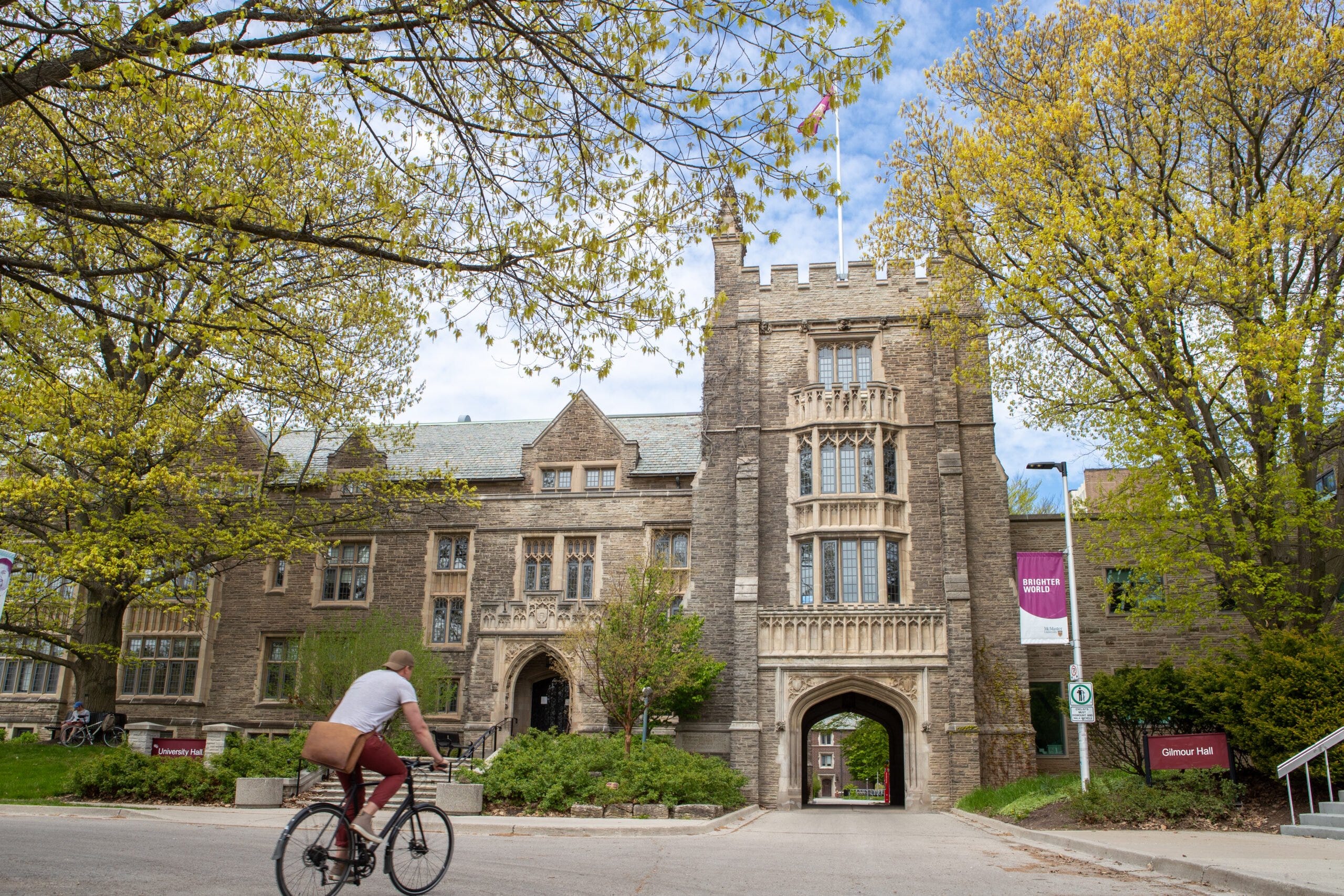
It was mid-summer when some of the “unconventional students” arrived at #McMaster University Medical School, to start a short preliminary science course. The medical school was barely a year old. There were twenty students in the first class and forty in the second year. Some were young Ontarians from McMaster’s undergrad ranks. As an experiment, a bunch of students, were admitted from a non-science background in the belief (hope) that a) we would survive the program and b) this would begin to “humanize” medicine. I was in the latter group along with a wild assortment of other characters.
The unconventional group included Doug, a bearded philosophy student from Guelph, Jenny, a frizzy haired hippy from Ottawa who wore contraceptive IUD’s as earrings and an older Texan, age 35, who became a grandfather while we were still in first year. His first name, remarkably enough, was “Houston”. He had a PhD. and was a leader of SDS, a student group that had traumatized American campuses for the previous five years. The conventional group included a few eccentrics such as an English biochemist who perennially wore an Ascot tie. The only person I knew at “Mac” was my brother-in-law Aaron.
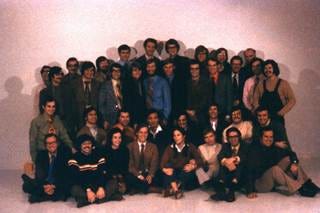
Together, Aaron and I made up 5% of the class. Our presence together wasn’t a complete accident. I had learned about the new medical program from Aaron when I married his sister, Jill. Their father, a prominent medical educator, was close friends of the newly appointed Chief of Psychiatry who was well informed about development of Canada’s newest medical school.
Lacking a conventional science background, I had been accepted at only two of the thirteen medical schools that I had applied to. McMaster was hoping that my strong showing in Political Science would make up for modest grades in the standard pre-med subjects. You can take the arts out of an arts student, but I was still more interested in learning the philosophy of biochemistry than memorizing established scientific facts. The difference was epitomized when Dr. Fraser Mustard, our esteemed Pathology Chief, complimented me on what he felt was a well written description of the process of inflammation. He stared at me incredulously, when in response to his question “where did you get that?”, I replied “I made it up.” The answer might merit an “A” in an arts course but making things up earns an” F” in science.
Jill and I rented the second floor of a small brick home on a side street in Hamilton’s west end in the shadow of an outcropping of the same Niagara escarpment which provided the height to Niagara Falls. Rick an electrician and Maggie, a nurse, were newlyweds about our age. By enclosing the stairs and putting in an upstairs kitchen, they had converted the second floor of the family dwelling into a tiny apartment. Jill, who was sociable and gregarious, and we quickly formed a friendship with these appealing people.
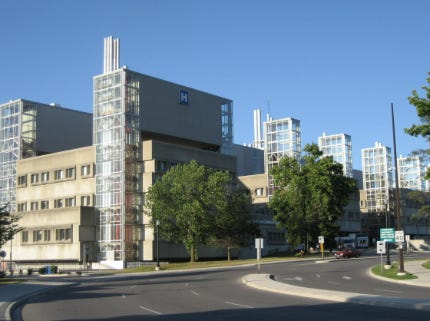
Preliminaries completed, the medical program started in earnest. The medical school building had not been constructed so our classes were conducted at “the San”, an old TB sanatorium located on the brim of the Hamilton escarpment. Most of the faculty had come to McMaster with an earnest desire to reform the way medicine was taught. They were led by Dr. John Evans, a brilliant young cardiologist, recruited from the University of Toronto to apply the concept of “self-directed learning” to medical education. This concept was based on the theory that students would learn best if they studied medicine based on clinical scenarios rather than the traditional siloed courses taught by the professors who each thought that the sanctity of medical education was based on their own particular field of interest. This was typified by the anatomy professors who insisted that even future psychiatrists needed to memorize the vessels of the heart and the course of the sciatic nerve. The medical school’s “Founding Fathers” were more excited about our presence than the students. They had been developing the curriculum for three years before our arrival.
Dr. Evans began our introduction with a session apply entitled “What’s Bugging You?” It was hard to know. We had only been medical students for ten minutes. This was a far cry from the standard speech to medical students at the beginning of term at most other Canadian universities, “Look to your left, Look to your right. By the end of this year, one of you won’t be here.”
One of the most exciting events was the distribution of our white coats and medical bags, conveniently provided by the Ciba Geigy Drug Company. This bag contained a measuring tape, a handy little metal reflex hammer and a rudimentary stethoscope, about the same quality as you get with nurse Barbie doll sets. Houston circulated a rumour that the drug company would provide an ophthalmoscope kit to any medical student who would allow the company logo to be tattooed on their ass. A number of my classmates were quite disappointed when they learned that the offer was not real.
I had the opportunity to use the kit mere days after receiving it. Jill and I were sound asleep when I awoke to the sounds of someone in deep distress in the neighborhood. I strained to decipher the source and the meaning of the sounds. I quickly deduced that our downstairs neighbor, Maggie, was having a terrible asthma attack. I leaped from the bed and grabbed my newly issued white lab coat, the first piece of clothes available.
The white coat barely covered my naked backside as I ran down the stairs, medical bag in hand, I started banging on the door. “Rick open up, open up” The wheezing sounds from the apartment reached a crescendo and then suddenly stopped. I could hear whispering through the thin walls, then a giggle. No one came to the door. Suddenly, the realization of the origins of the asthma attack dawned on me, I crept back upstairs. Jill was killing herself laughing but Rick and Maggie were deeply embarrassed. For weeks they waited until we had left the apartment before coming out to avoid the possibility that I would ask Maggie about her asthma.
----To be continued --
Postscript
McMaster’ progressive medical program went on to produce many national and international medical leaders who made lasting contributions to their countries, their communities and their patients. The basic tenets of the program were ultimately endorsed, copied and rebranded as “#The Harvard Curriculum” by the university of the same name. #Dr. John Evans, the founding Dean became Director of Population Health and nutrition for the World Bank after a stint as President of the University of Toronto.
Couldn't agree more. The idea of humanizing medicine by bringing in non-science backgrounds is truly inspired. It makes you wonder what kind of sytemic impact such diversity had. What if all university programs, even in STEM or AI, embraced such unconventional approaches to foster empathy and critical thinking?
I’m still laughing about the supposed asthma attack 🤣